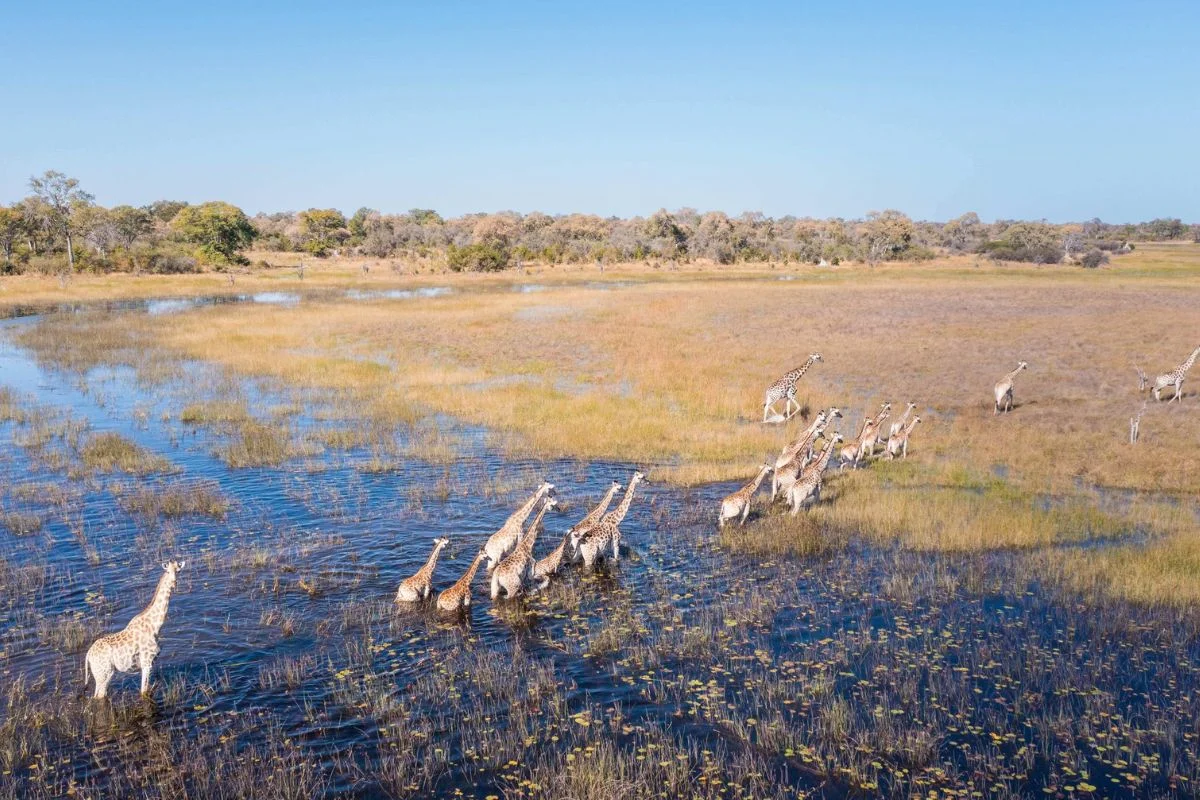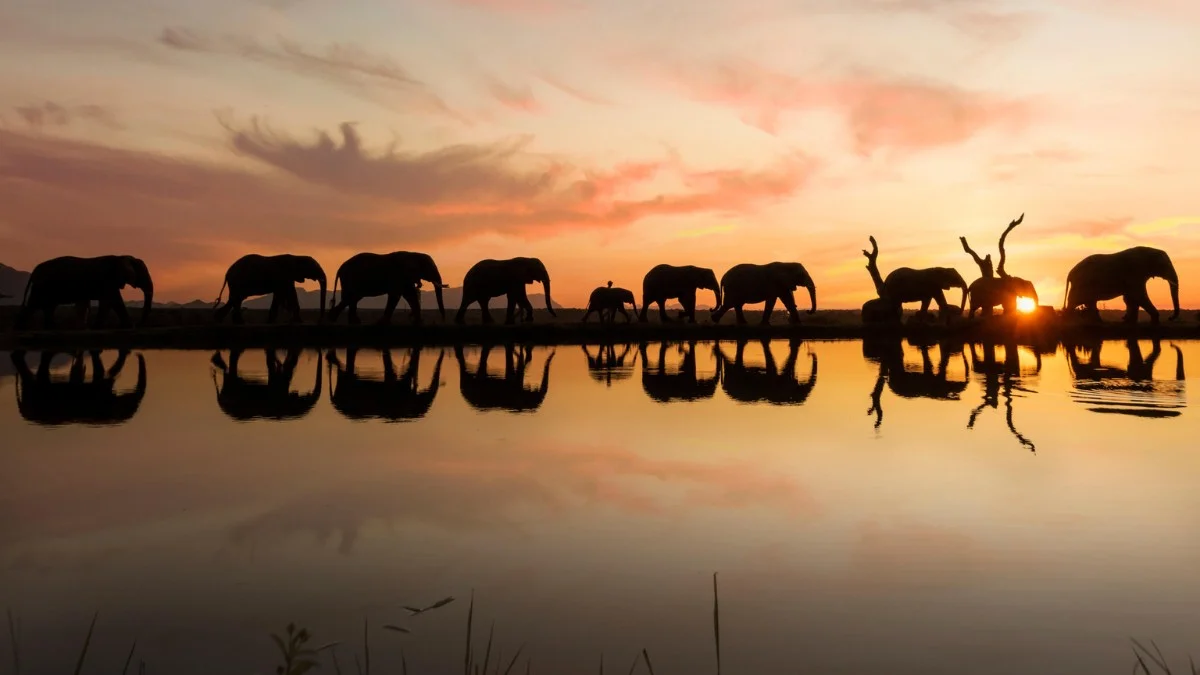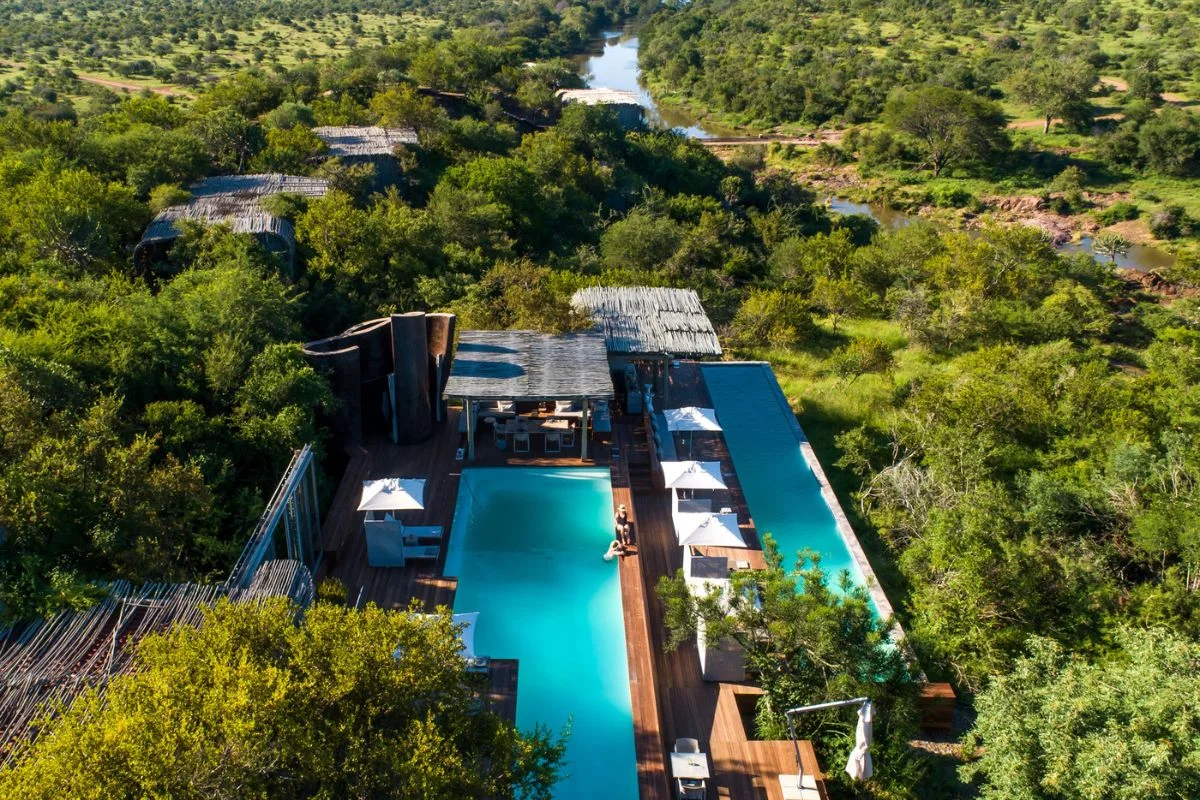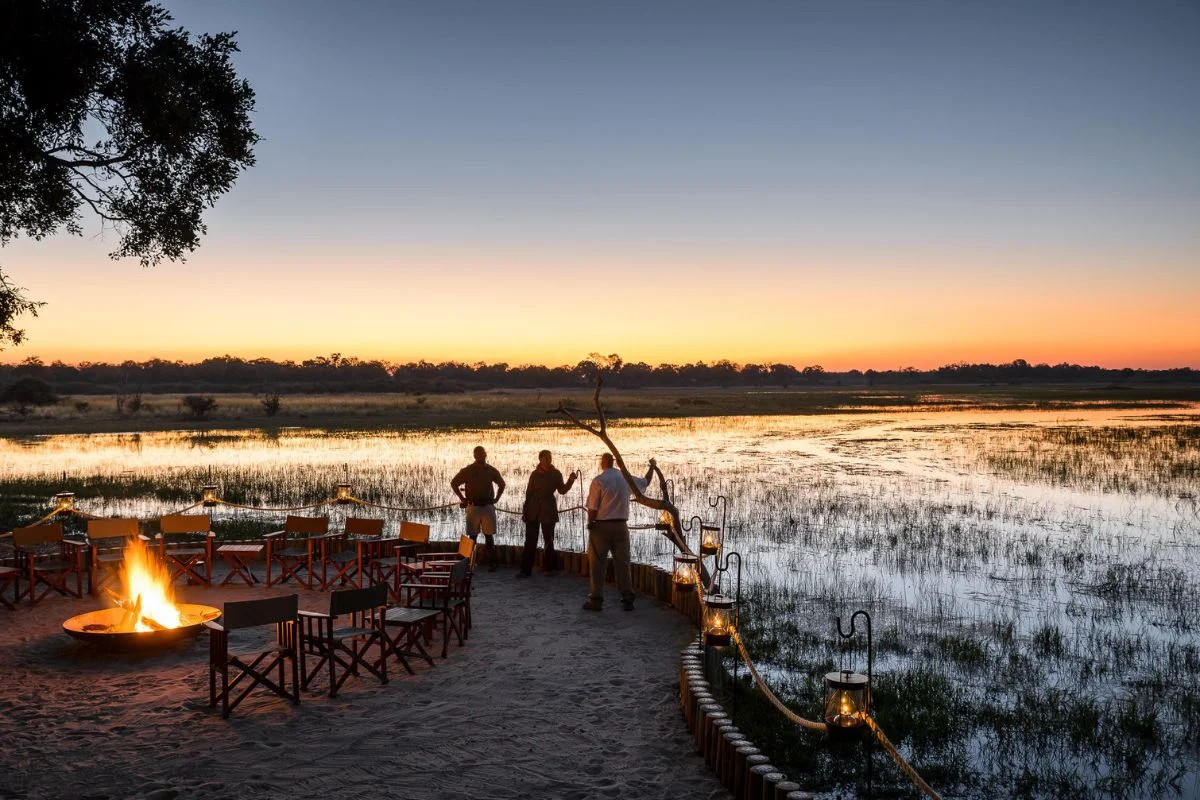

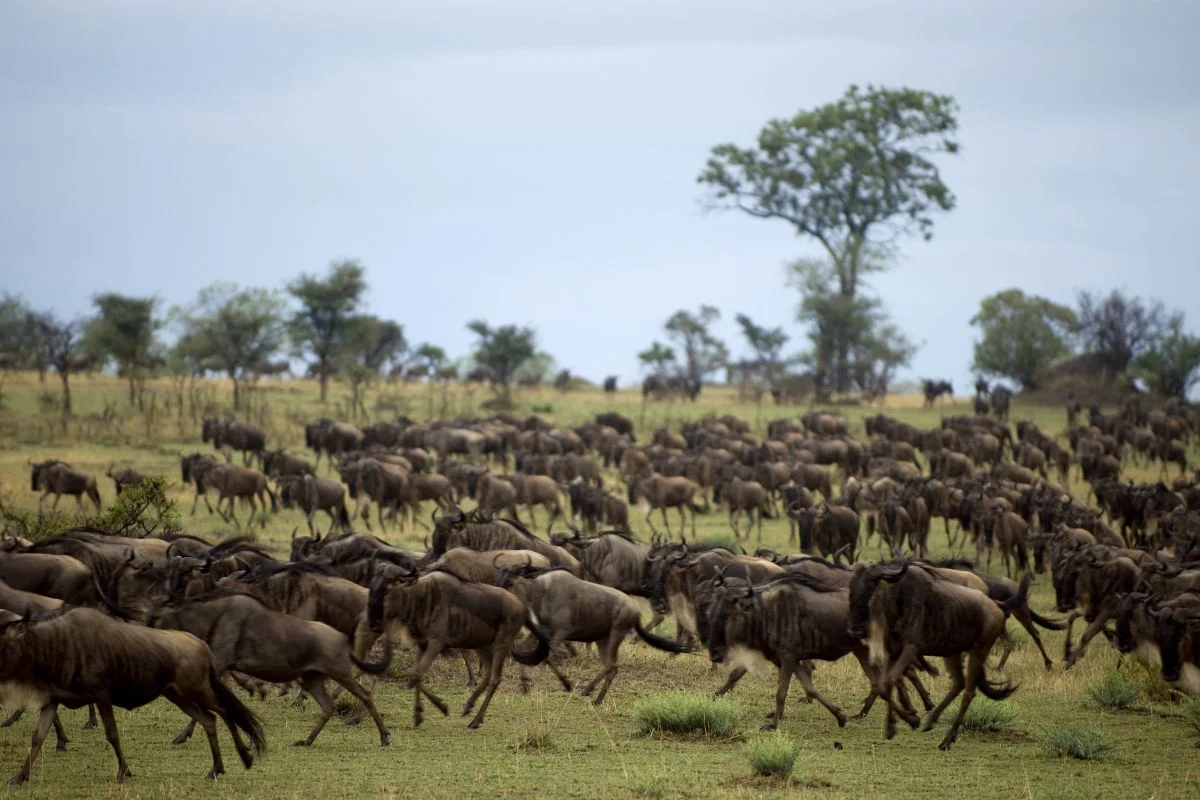
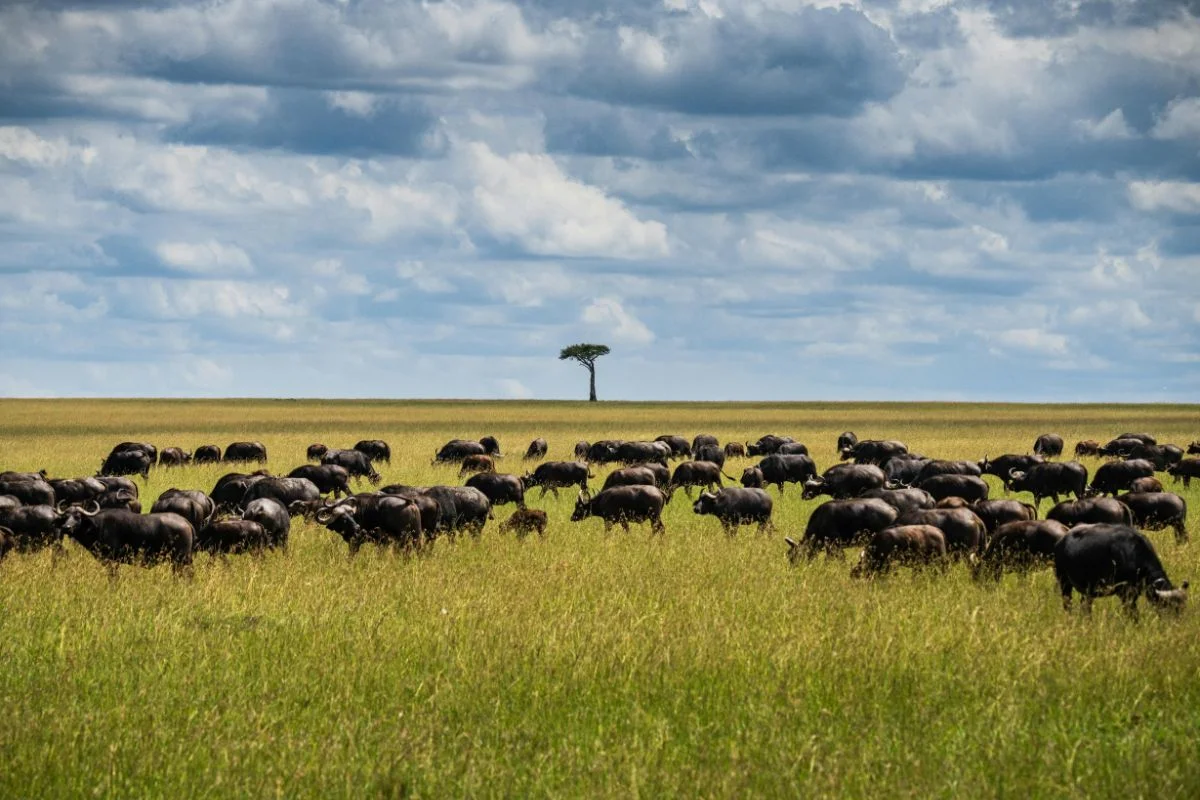
The Great Migration is a year-round event but the most popular attractions are calving season from Jan to March and the Mara River crossing from July to October.
The Great Migration stays in Tanzania from December through July, with calving in the southern Serengeti (January-March), the western corridor crossings (June-July), and northern Serengeti crossings (July-October). The herds then move into Kenya's Maasai Mara (August-October) before returning south in November. Plan your Tanzania visit around either calving season or river crossings for peak drama.

The Great Migration between July to October across the Mara River is one of natures most incredible wildlife spectacles, a real game of hunter and prey. If travelling August / September it is recommended to book 9-12 months in advance.
Key takeaways
The Great Migration follows a 1,800-mile annual circuit through Tanzania's Serengeti and Kenya's Maasai Mara, with roughly 1.5 million wildebeest and 250,000 zebra.
Calving season (late January through February) in the southern Serengeti produces 8,000 calves daily and attracts dense predator concentrations around Ndutu and the Ngorongoro Conservation Area border.
Grumeti River crossings occur in the western corridor from late May through July, while Mara River crossings in the northern Serengeti peak from late July through October.
The herds spend December through March in southern Tanzania, April through June moving northwest, and July through October in the northern Serengeti and Maasai Mara.
Migration timing varies by 2-4 weeks annually depending on when the short and long rains arrive, making flexible safari dates and mobile camps advantageous.
Prime Tanzania migration safaris cost $600-$1,200 per person per night in high season (June-October and late January-February), with mobile camps tracking the herds month by month.
Great Migration Best Time to Visit
The Great Migration's annual cycle through Tanzania
The Great Migration moves through Tanzania for approximately nine months of the year, following a predictable but variable clockwise route and an excellent option for a Tanzania Africa Honeymoon.
The herds depart Tanzania's northern Serengeti for Kenya's Maasai Mara around August and return to Tanzania's northern reaches in October, then continue their southward journey through the central and southern Serengeti from November through December.
This movement is triggered by the search for fresh grazing and water, with wildebeest and zebra following the rainfall patterns that dictate grass growth across the Serengeti-Mara ecosystem.
The migration is a continuous cycle, not an event with fixed start and end dates. Roughly 1.5 million wildebeest travel alongside 250,000 zebra and 400,000 Thomson's gazelle, covering around 1,800 miles annually.
Zebra lead the column, grazing on tall grasses, followed by wildebeest that prefer shorter, more nutritious shoots, and finally gazelle that crop the lowest vegetation. This succession allows the ecosystem to support all three species without depleting the grasslands.
How predictable is the migration's timing each year?
Migration timing shifts by 2-4 weeks annually depending on rainfall patterns. The short rains (November-December) and long rains (March-May) dictate when fresh grass appears, which determines when the herds move into each region.
Drought years compress the cycle, while heavy rains can delay river crossings or spread herds across wider areas.
Mobile safari camps track the herds in real time, repositioning every 6-8 weeks to maintain proximity. Booking with a specialist operator that monitors herd movements daily and adjusts itineraries accordingly is the most reliable approach for witnessing specific migration phases.
Travel costs in Serengeti
Tanzania
Expect $650 to $2,500 per person per night in the Serengeti's luxury camps and lodges. Peak season drives prices 40% higher than low season.
| Tier | Per person / night | What you get |
|---|---|---|
| Standard Luxury | $650 - $950 | Permanent tented camps with en-suite bathrooms, quality guiding, full board, and twice daily game drives. |
| Premium Luxury | $1,000 - $1,600 | High-end camps featuring private decks, premium locations, bush dinners, spa services, and expert naturalist guides. |
| Ultra-Luxury | $1,700 - $2,500 | Exclusive mobile camps and elite lodges with private plunge pools, butler service, and flexible private guiding. |
What's included
- All meals and house beverages
- Twice daily shared game drives
- Serengeti National Park fees
- Light aircraft transfers within Tanzania
- Laundry service at most camps
What's not included
- International flights to Tanzania
- Premium imported spirits and champagne
- Hot air balloon safaris
- Gratuities for guides and staff
- Travel and medical insurance
When to go
Peak season runs July through October and late December through February, adding 30% to 50% versus March through May green season.
Best value tip
Book shoulder season in June or November for migration access at 25% lower rates than peak months.
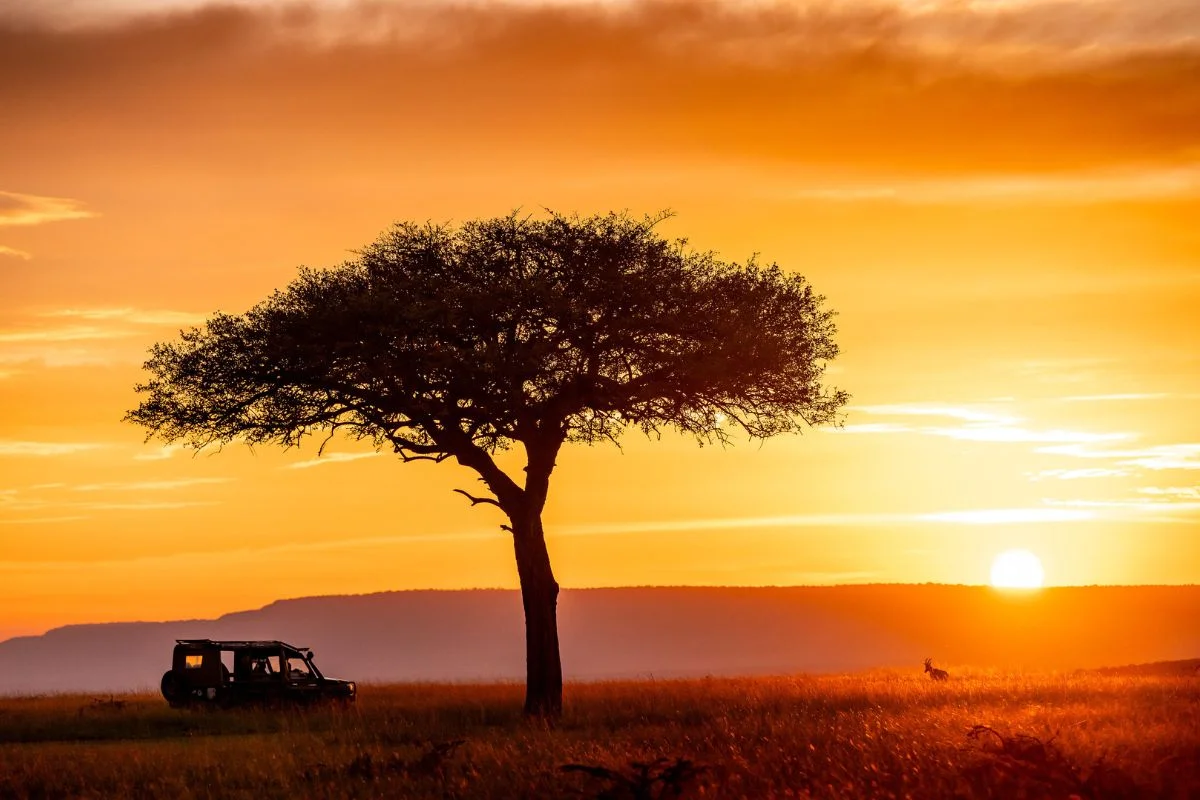
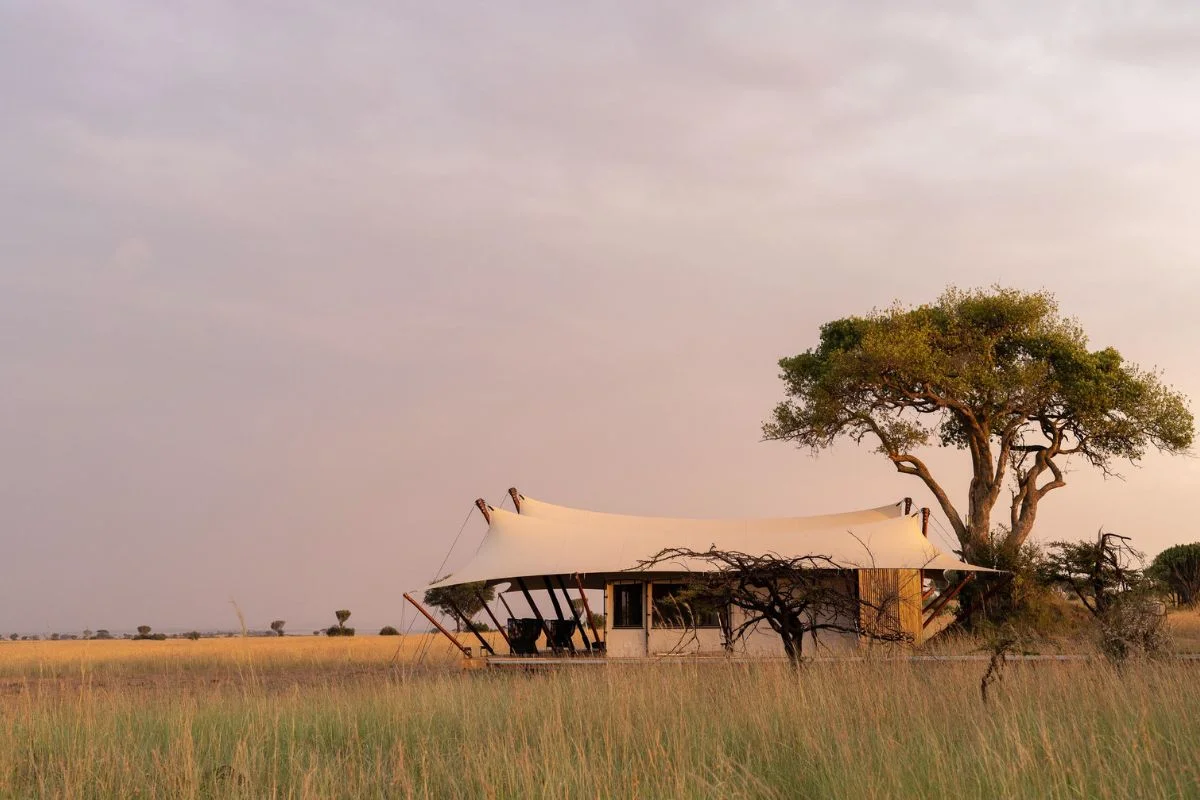
December to March: Calving season in the southern Serengeti
From December through March, the migration concentrates in Tanzania's southern Serengeti plains and the Ngorongoro Conservation Area, particularly around Ndutu, Kusini, and the Salei Plains.
The herds arrive in late November or early December as the short rains green the volcanic soils, which produce highly nutritious short-grass plains ideal for pregnant females. Calving peaks from late January through February, when approximately 8,000 wildebeest calves are born daily across a concentrated 2-3 week window.
This synchronised birthing overwhelms predators with sheer numbers, giving individual calves better odds of survival. Lions, cheetahs, leopards, and hyenas converge on calving grounds, creating exceptional predator-viewing opportunities.
Newborn wildebeest can stand within minutes and run within hours, but the vulnerable first weeks produce intense predation. Cheetahs particularly thrive during calving season, and the southern plains offer open sightlines for witnessing hunts across short-grass savannahs.
The Ndutu region sits on the border between the southern Serengeti and Ngorongoro Conservation Area. Several seasonal mobile camps operate here from December through March, positioning close to the herds.
This period offers excellent game viewing with fewer vehicles than the northern Serengeti river crossings, making it a strong choice for photographers and travellers seeking less crowded experiences. Afternoons can bring dramatic thunderstorms as the long rains build, adding atmospheric backdrops to wildlife photography.
Frequently asked questions
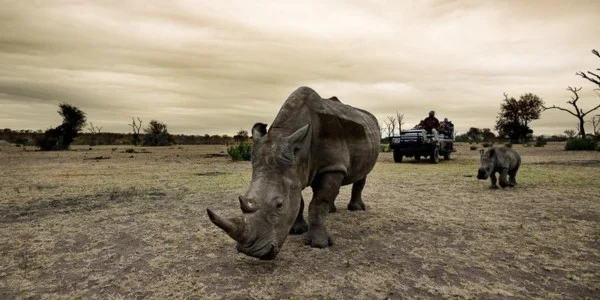
Can I see white rhinos in the Serengeti?
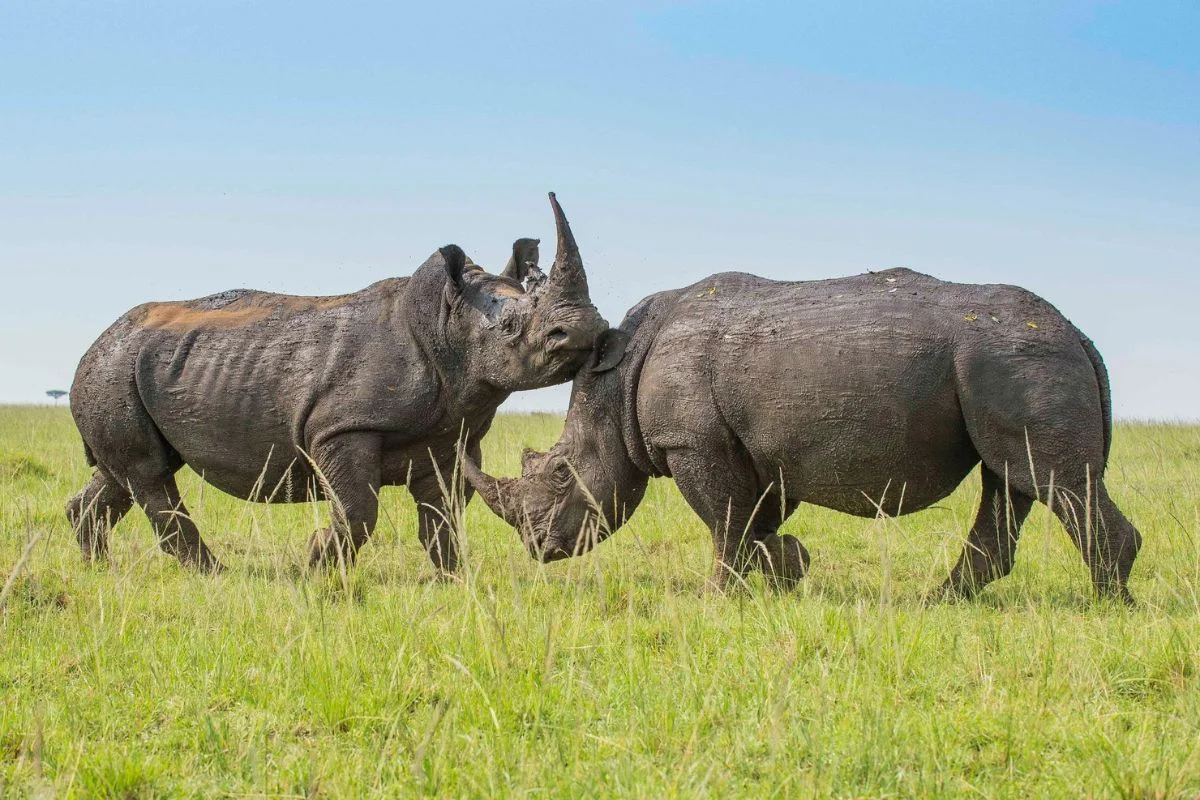
No, the Serengeti has no white rhinos. Black rhinos are present but rare in the park. Despite this, the Serengeti is one of the best safari destinations in Africa and offers exceptional wildlife viewing opportunities, particularly famous for the great migration, large lion prides, elephants, buffalo, leopards, and cheetahs. If seeing white rhinos is essential to your safari experience, you will need to visit a different park. However, the Serengeti provides an otherwise outstanding and comprehensive wildlife experience.
What is the best time to go on safari in East Africa?
July and August are peak season and a very good time of year to go on safari in all of the major safari countries. This period offers excellent wildlife viewing conditions across destinations like Kenya, Tanzania, Botswana, Zambia, and Zimbabwe. However, because these months are peak season, they are also one of the busiest times of year. If you are planning to travel during July or August, be aware that many lodges and camps will be booked well in advance, so early planning is essential.
Should I visit Masai Mara or Serengeti for the great migration?
The Masai Mara and Serengeti are essentially the same ecosystem on either side of the Kenya/Tanzania border, both offering phenomenal game viewing. Kenya is generally cheaper than Tanzania, which may influence your decision. Both destinations are excellent for experiencing the great migration during July and August. However, keep in mind that while you will most likely see the migration herds in the Mara during August, river crossings are never guaranteed and you could wait for hours without seeing one. Either destination will provide an excellent migration experience.
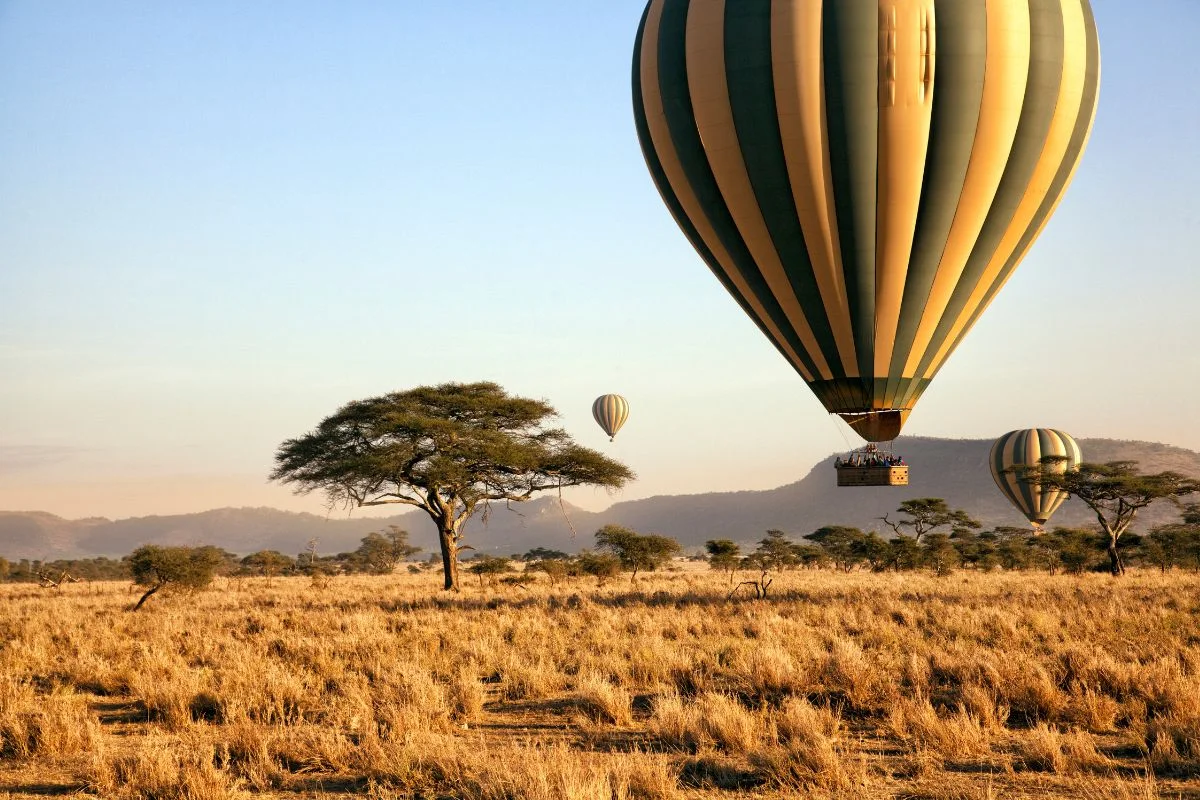
April to June: The journey northwest
In April and May, the herds begin their northwest migration toward the western corridor as the southern plains dry out. The timing depends on when the long rains arrive: heavy rains in April can keep herds south longer, while dry conditions push them west earlier.
By late May and into June, the migration typically reaches the western corridor, where the Grumeti River creates the first major water obstacle.
Grumeti River crossings occur from late May through July, though they lack the drama and frequency of the later Mara River crossings.
The Grumeti is narrower with fewer crossing points, and herds often cross in smaller groups over extended periods rather than in the massed crossings seen further north.
Large Grumeti crocodiles, some exceeding 5 metres, wait in pools for crossing wildebeest. The western corridor also supports resident wildlife, including large elephant herds and the hippo pools near Kirawira and Grumeti Serena.
This transitional period from April through early June represents the Serengeti's green season, with fewer lodges operating and reduced tourist numbers.
Some mobile camps close or relocate, and certain roads become impassable after heavy rains. However, travellers willing to navigate occasional logistical challenges encounter dramatic landscapes, newborn predator cubs, and excellent birding as Palearctic migrants overlap with resident species.
Rates drop 20-40% compared to high season, offering value for flexible travellers.
Is the western corridor worth visiting during migration?
The western corridor from late May through July offers a quieter alternative to the northern Serengeti, with smaller crowds and lower rates while still positioning you near migrating herds.
Grumeti crossings occur less predictably than Mara crossings, so this phase suits travellers prioritising overall Serengeti game viewing over witnessing a specific crossing. Permanent lodges like Singita Grumeti and Sabora Plains Camp provide luxury bases, while mobile camps such as Ubuntu and Olakira reposition to track herd movements through June and early July.
Serengeti — best time to visit
| J | F | M | A | M | J | J | A | S | O | N | D | |
|---|---|---|---|---|---|---|---|---|---|---|---|---|
| High °C | 28° | 28° | 28° | 26° | 24° | 23° | 23° | 24° | 26° | 27° | 27° | 28° |
| High °F | 82° | 82° | 82° | 79° | 75° | 73° | 73° | 75° | 79° | 81° | 81° | 82° |
| Rain mm | 65 | 80 | 130 | 195 | 95 | 15 | 10 | 20 | 30 | 60 | 115 | 105 |
| Rating |
Serengeti: Calving in the southern Serengeti Jan–Mar; river crossings in the north Jul–Oct.
Ideal — Peak conditions — dry, comfortable, prime wildlife or beach time.
Good — Great conditions with brief showers or warmer days; still highly recommended.
Shoulder — Mixed weather — fewer crowds and lower rates, occasional rain.
Avoid — Heaviest rain or roughest seas; many camps and roads can be affected.
July to October: River crossings in the northern Serengeti
From July through October, the migration reaches the northern Serengeti, where the Mara River creates the most dramatic and photographed wildlife spectacle on the continent.
Crossings peak from late July through September, with herds massing on riverbanks before plunging into crocodile-filled waters.
The Mara River features steep banks and fast currents, creating chaotic, high-stakes crossings where wildebeest sometimes drown or are taken by Nile crocodiles measuring up to 5 metres.
Crossings are unpredictable. Herds may gather for hours or days before one animal triggers a stampede into the water. They cross at multiple points along the Mara, with Kogatende in Tanzania's far northern Serengeti offering prime access.
From August through October, a portion of the migration moves into Kenya's Maasai Mara, but substantial numbers remain in Tanzania's northern reaches throughout this period, particularly around Kogatende, Lamai, and the Bologonja region.
This peak season brings the highest visitor numbers and lodge rates in the Serengeti. Expect $800-$1,200 per person per night at prime northern Serengeti camps during July-October. Vehicle congestion around popular crossing points can be intense, with 20-30 safari vehicles sometimes gathering at known sites.
Booking with operators who know alternative crossing points and prioritise early starts significantly improves your experience. Mobile camps like Serengeti Safari Camp and Kimondo reposition to the northern Serengeti from July through October, offering proximity to crossings with more flexible viewing schedules than permanent lodges.
What are your chances of seeing a Mara River crossing?
Your odds of witnessing a Mara River crossing improve with longer stays in the northern Serengeti. A 3-night stay during peak season (late July-September) gives approximately 60-70% probability of seeing at least one crossing, while 4-5 nights raises odds above 80%.
Crossings happen in the early morning or late afternoon, so multiple full days with morning and afternoon game drives maximise chances.
No operator can guarantee a crossing, and you may witness multiple crossings in one day or none across several days. Accept this uncertainty, enjoy exceptional general game viewing in the northern Serengeti, and treat any crossing as a bonus.
Visit Cape Town
Visit the number one rated city in the world with 8 blue flag beaches, swimming with penguins and so much more
Plan My SafariNovember: The return south
In November, the herds begin their return journey from the Maasai Mara and northern Serengeti back toward central and southern Tanzania. The short rains green the plains, triggering the southward migration.
This transitional month sees herds scattered across the central and eastern Serengeti, often around Seronera and the Lobo region. Game viewing remains excellent, with predators actively hunting as herds pass through, but the migration lacks the concentrated drama of calving season or river crossings.
November falls into shoulder season, with variable weather as the short rains arrive. Some days bring afternoon showers, while others remain clear.
Lodges offer reduced rates compared to the July-October peak, and vehicle numbers drop significantly. Travellers seeking value and lower crowds while still accessing migration viewing find November attractive, though you sacrifice the guaranteed spectacle of calving or crossings for more dispersed herds and less predictable sightings.
Where to stay during Tanzania's Great Migration
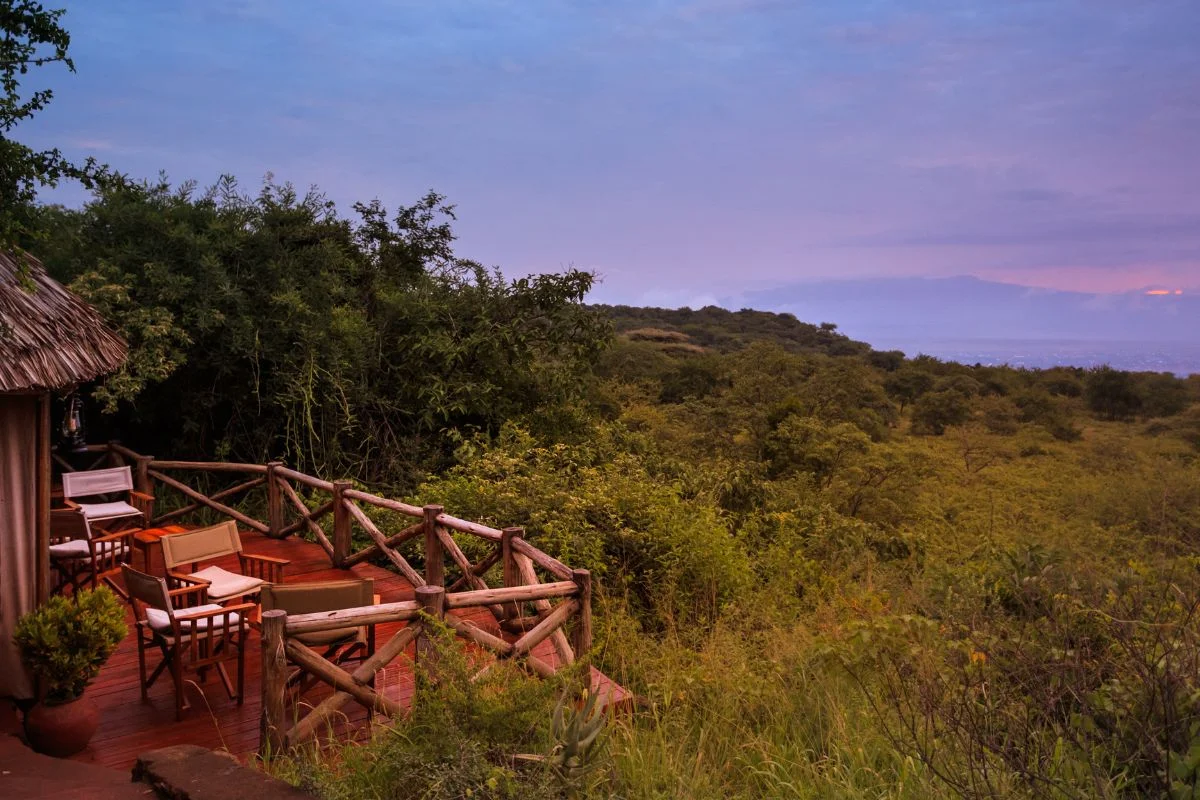
Accommodation strategy depends on which migration phase you target. For calving season (December-March), base yourself in seasonal mobile camps at Ndutu or on the southern Serengeti plains, which operate specifically during these months and dismantle when herds move north.
Options include Olakira Migration Camp, Ubuntu Migration Camp, and &Beyond Serengeti Under Canvas. These camps reposition to the northern Serengeti from July through October, tracking the herds throughout the year.
For Mara River crossings (July-October), choose camps in the far northern Serengeti near Kogatende: Sayari Camp, Lamai Serengeti, Serengeti Safari Camp, and Ubuntu's northern position.
Singita Mara River Tented Camp offers ultra-luxury with direct river views. Permanent lodges such as these maintain fixed locations, so confirm herd proximity before booking. Some travellers prefer mobile camps that guarantee flexibility, moving if herds shift unexpectedly.
Central Serengeti lodges around Seronera (Four Seasons Safari Lodge, Dunia Camp, Serengeti Sopa) provide year-round resident game viewing but only intercept migration herds during transitional months (April-May, November). They suit multi-park itineraries where the Serengeti is one component rather than the sole focus.
Western corridor lodges like Singita Sasakwa and Kirawira Serengeti Camp position well for June-July but sit distant from calving grounds and northern crossings.
Seychelles Island Escape
Visit the jewel of the Indian Ocean with blue azure waters and white sandy beaches.
Plan My SafariPlanning your Tanzania migration safari
Select your target experience first: calving drama with predators and newborns (January-February), Grumeti crossings in quieter settings (June-July), or iconic Mara River crossings with peak drama and crowds (August-September). Book 9-12 months ahead for July-September peak season, as northern Serengeti camps sell out by January for the following summer.
Calving season requires 6-8 months lead time. Shoulder months (April-June, November) offer 3-4 month booking windows.
Allocate 4-5 nights in the Serengeti to account for migration unpredictability and maximise crossing chances if targeting July-October. Combine the Serengeti with Ngorongoro Crater (2 nights) and Tarangire (2 nights) for a comprehensive northern circuit covering diverse ecosystems. Flying between parks via scheduled light aircraft saves time and avoids long road transfers: Arusha to Serengeti takes 6-8 hours by road but only 90 minutes by air.
Budget $600-$1,200 per person per night for quality mid-range to luxury Serengeti camps during high season, including accommodation, meals, game drives, and park fees. Ultra-luxury options like Singita exceed $2,000 per person per night. Add $200-400 for internal flights and $50 per person for Serengeti park entry fees (paid daily). Total costs for a 7-night northern Tanzania safari range from $6,000 to $15,000 per person depending on season and lodge category.
Ngorongoro — best time to visit
| J | F | M | A | M | J | J | A | S | O | N | D | |
|---|---|---|---|---|---|---|---|---|---|---|---|---|
| High °C | 22° | 22° | 22° | 21° | 20° | 19° | 19° | 20° | 21° | 22° | 22° | 22° |
| High °F | 72° | 72° | 72° | 70° | 68° | 66° | 66° | 68° | 70° | 72° | 72° | 72° |
| Rain mm | 55 | 70 | 110 | 180 | 90 | 20 | 15 | 20 | 30 | 55 | 95 | 90 |
| Rating |
Ngorongoro: Cool highland crater — game-rich year-round; clearest skies Jun–Oct.
Ideal — Peak conditions — dry, comfortable, prime wildlife or beach time.
Good — Great conditions with brief showers or warmer days; still highly recommended.
Shoulder — Mixed weather — fewer crowds and lower rates, occasional rain.
Avoid — Heaviest rain or roughest seas; many camps and roads can be affected.
Last updated: October 2026